
The Heritage
Atlas of Ceylon.
Three millennia of kingdoms, monsoons, and monasteries, charted into slow, story-led journeys for travellers who arrive to listen.
The British Ceylon Collection
A curated section for travellers drawn to Ceylon’s colonial heritage, tea estates and hill-country railways — priced in GBP, with UK visa guidance and a dedicated fortnight itinerary.
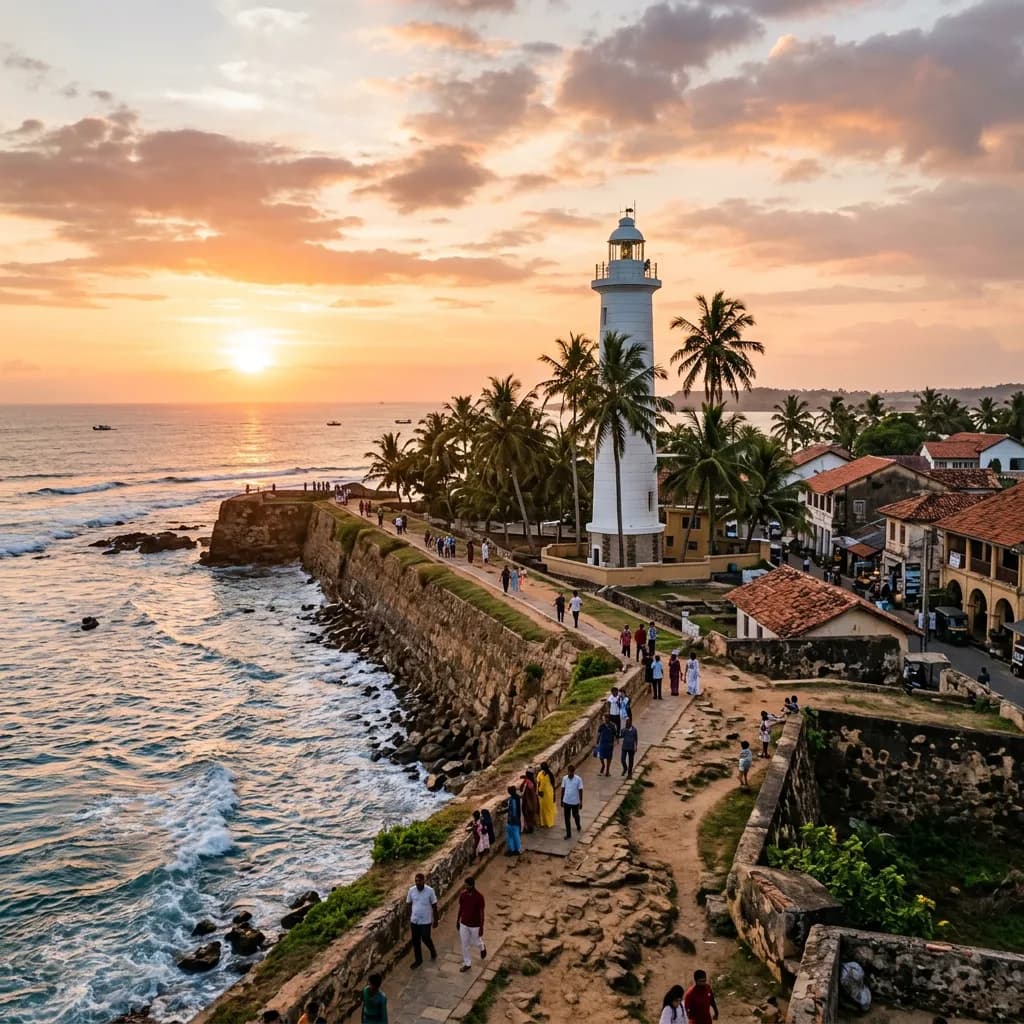 The Collection · I
Colonial Heritage & Galle Fort
Three European powers left their mark on Ceylon, and the traces are everywhere once you know how to read them — in a Dutch gable i…
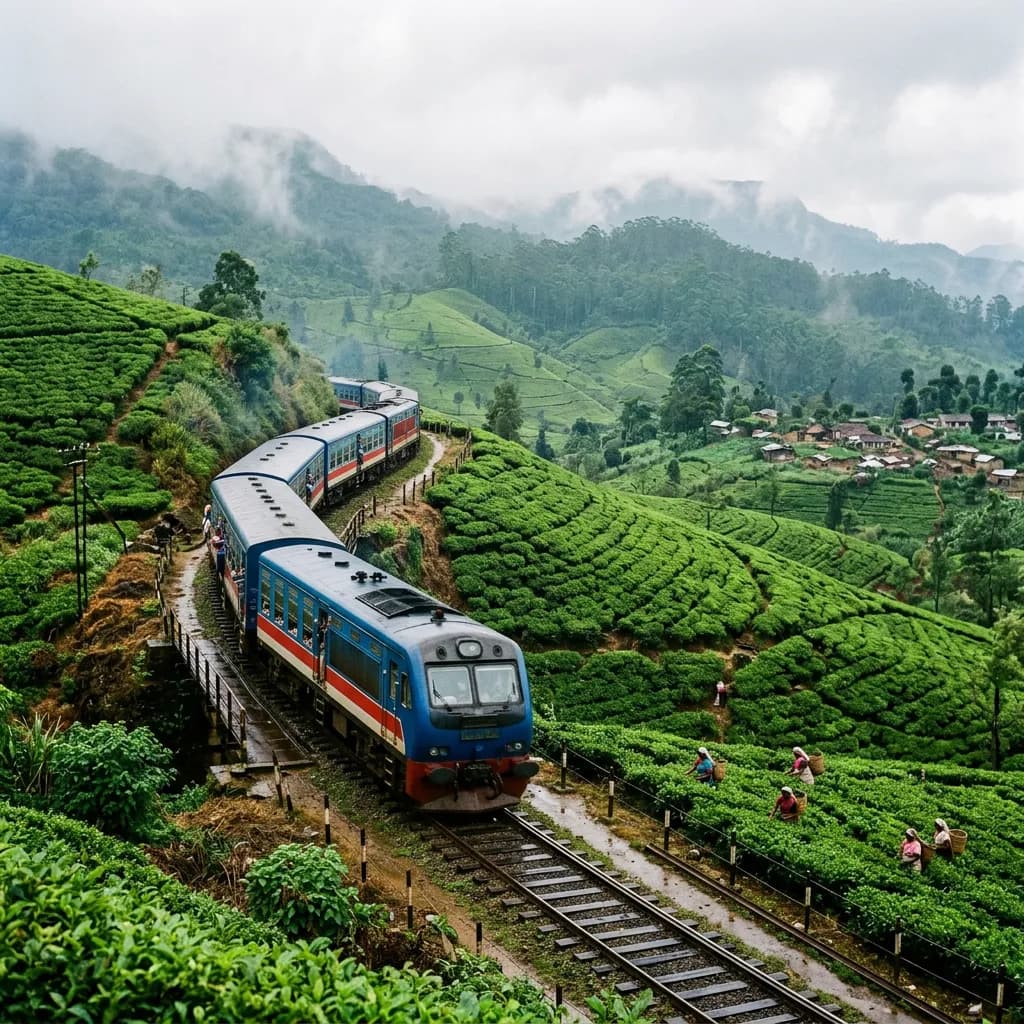 The Collection · II
Tea Estates, Bungalows & Ceylon Railways
Ceylon earned its name in the hills. When coffee failed in the 1870s, the British planted tea across the highlands, and with it ca…
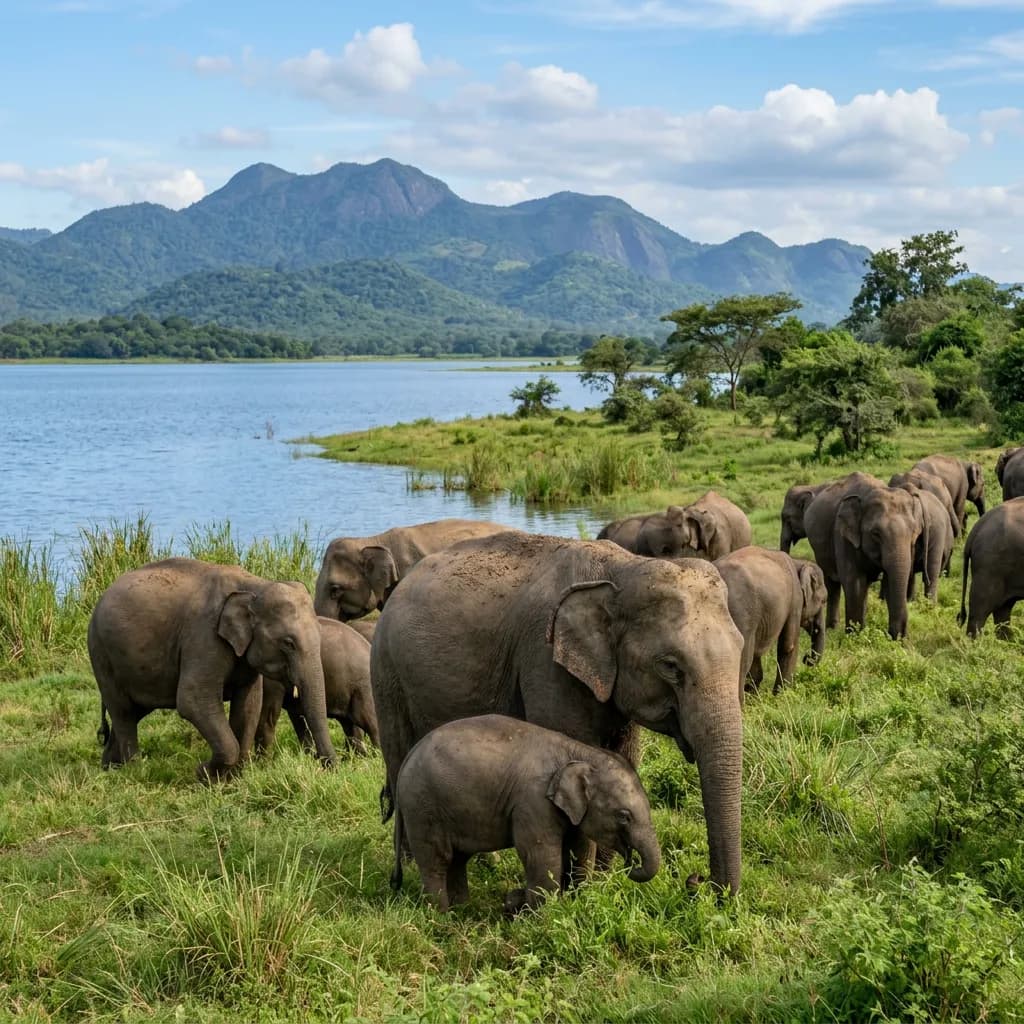 The Collection · III
Planning from the UK — Visa, Pricing & Practicalities
Sri Lanka is one of the most rewarding long-haul destinations from the UK — direct and one-stop flights, a manageable time differe…
An island read as a library, not a destination.
Filed at Galle, the twenty-first of May, two thousand twenty-six.
We move slowly between Anuradhapura, Polonnaruwa, Kandy and Galle, treating each city like a paragraph in a longer book — read aloud by monks, planters, archivists and grandmothers who still know the song their walls were built to.
The British Ceylon Collection is the heritage imprint of Tours of Ceylon, the island's longest-running cultural circuit. Our travellers are reading people — historians, photographers, architects, retired diplomats, second-honeymooners — and our work is to design weeks of travel that read like literature, not like an itinerary.
Every journey we publish is footnoted: a stone, a name, a monsoon, a recipe. Nothing is included because it must be; everything is included because it could not, in good conscience, be left out.
Choose a feeling. We will find the kingdom.
An inversion of the usual brochure: begin with how you wish to leave, end with where you should go.
 M·01 — AWE
A rock that remembers being a king.
Climb the lion's paws before the first call of the koel. Five hundred metres up, frescoes of bare-shouldered women still survive the centuries — and so, briefly, will your sense of scale.
Twenty-three centuries, drawn as a river.
A scrolling chronology of the seats of power — from Anuradhapura's tanks to Kandy's last lake.
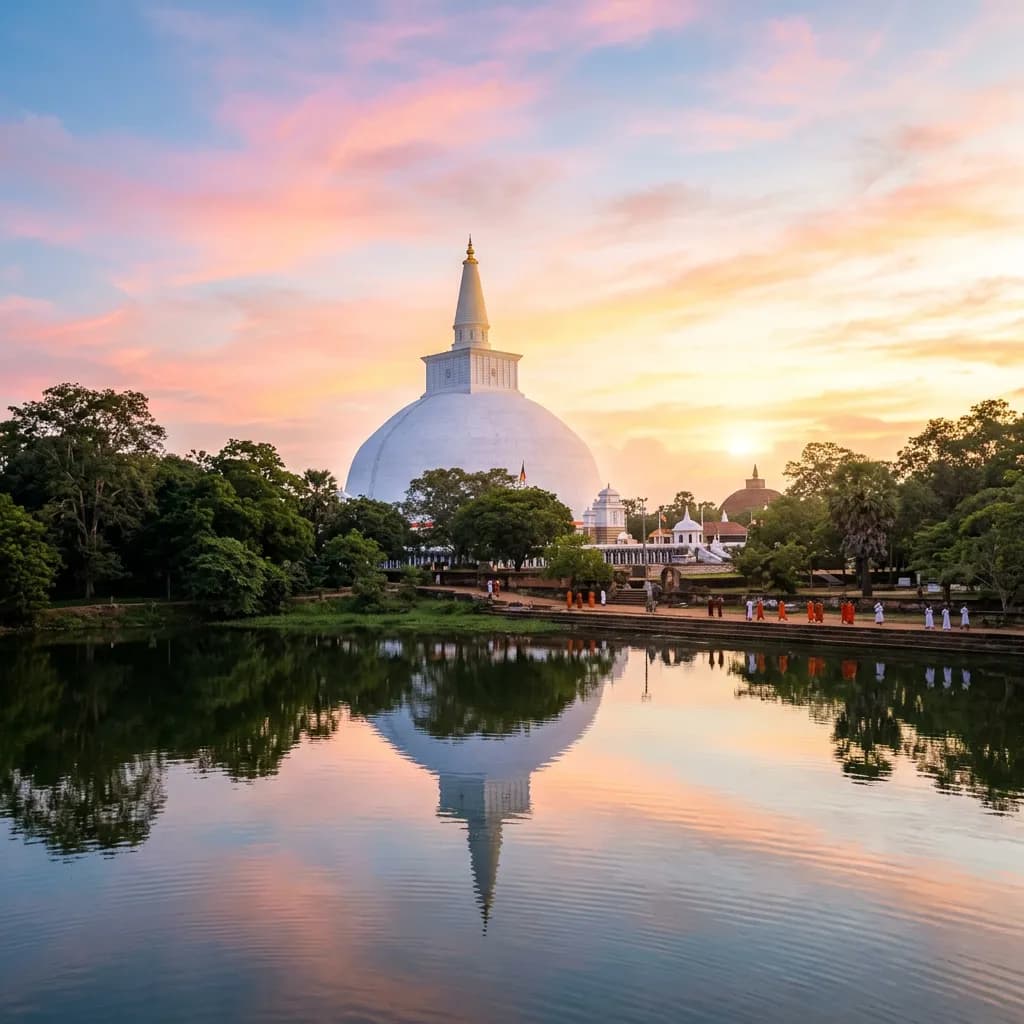
Anuradhapura — the city of water and silence.
For fourteen centuries this was Sri Lanka's capital and one of South Asia's largest cities, ringed by colossal dagobas and a hydraulic civilisation of tanks and sluices that fed paddy through dry zones for a hundred generations. We walk it at first light, before the parakeets and the buses.
Spend three unhurried days inside the Sacred City — the Ruwanwelisaya at moonrise, the Bodhi Tree under monks' chanting, the Abhayagiri brick pile rising out of the forest like a slow exhalation.
Nine sites, one ancient idea of how to live.
Tap a pin to read its chapter. The map is editorial, not navigational.
An ancient circuitboard of belief, water and stone.
Between the third century before Christ and the thirteenth after, Sri Lanka built a civilisation that ran on rice, rain and relics. The Cultural Triangle is what remains of its hardware — and the people who live among it are still its operating instructions.
An hour above the clouds in Nuwara Eliya.
Slow travel pages from the hill country — to be read on a verandah.
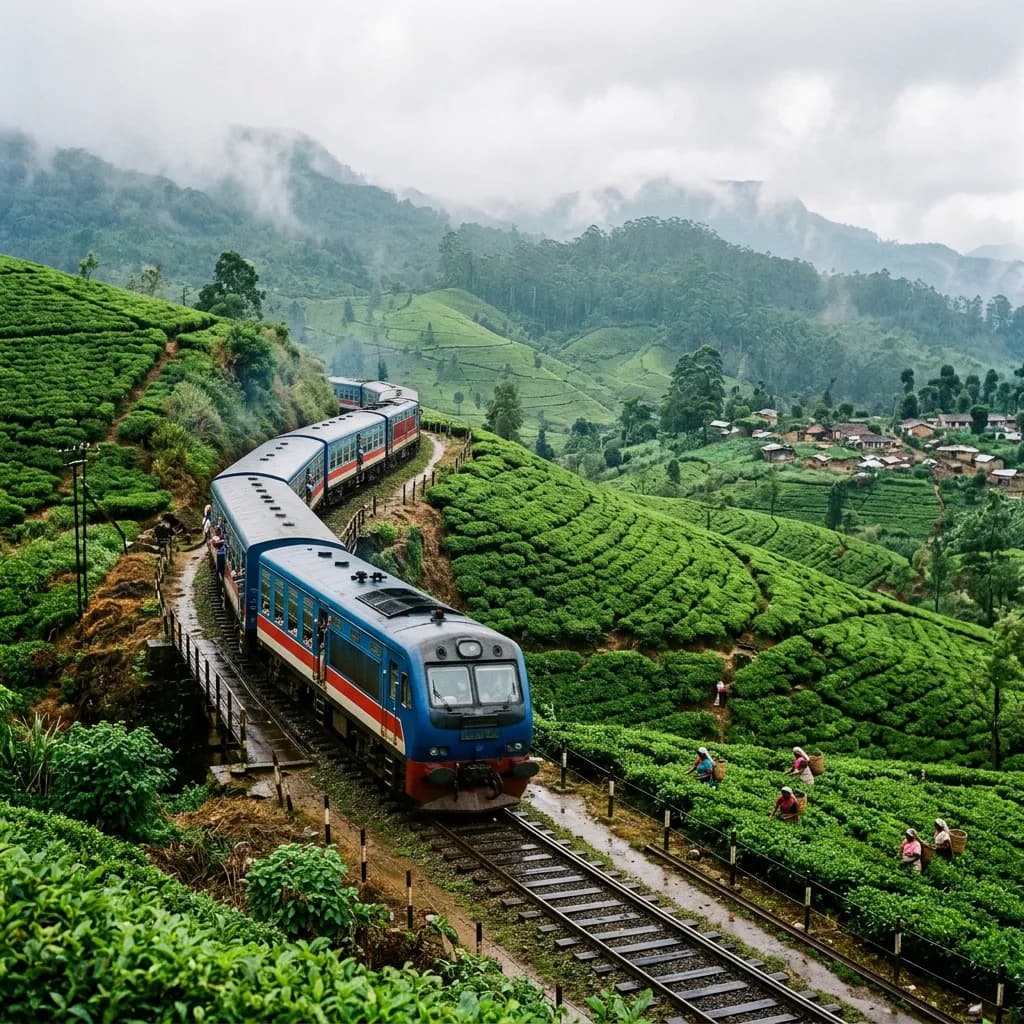 Plate V·a · Tea field at 6,128 ft
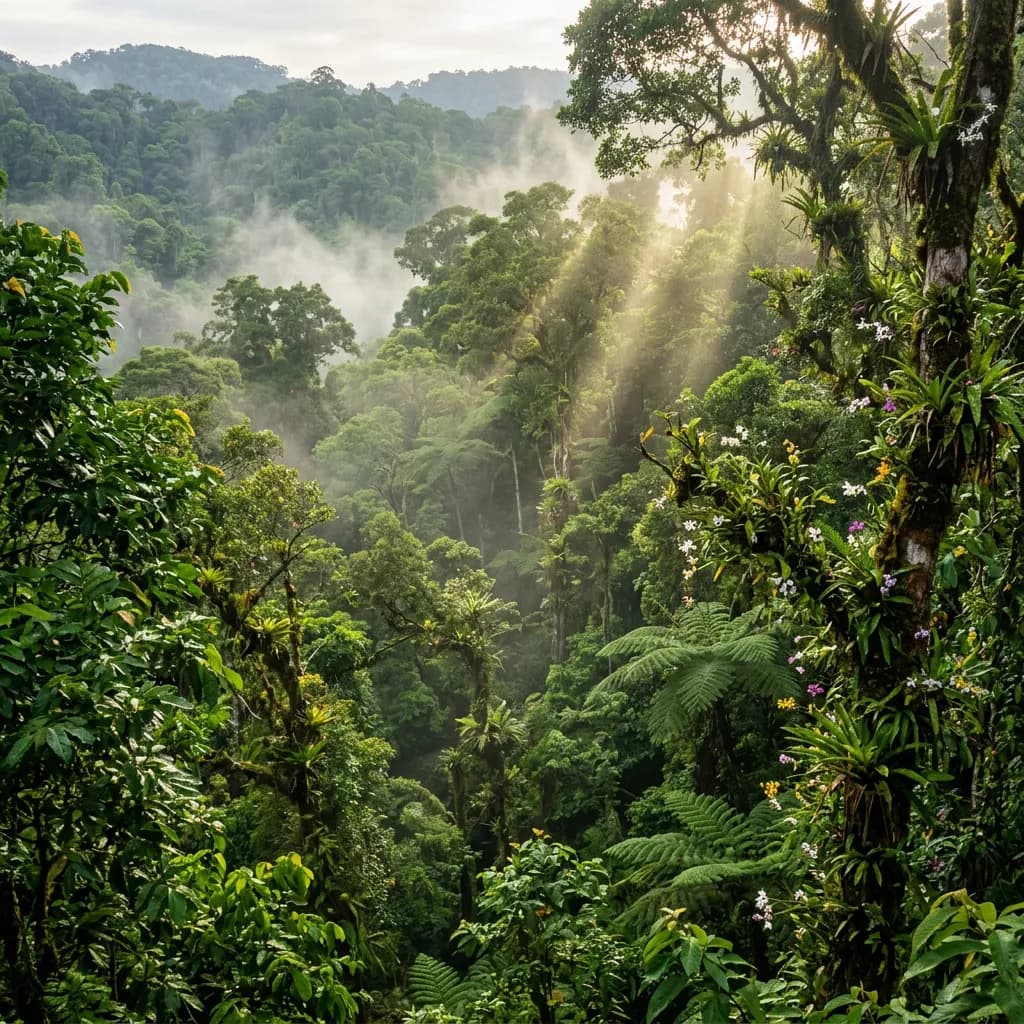
The plantation is quiet at 5.40 am; the tea is not.
Three days at a bungalow above Pedro Estate, with mornings spent in the green corridors between Camellia sinensis bushes, and afternoons spent doing nothing in particular at all.
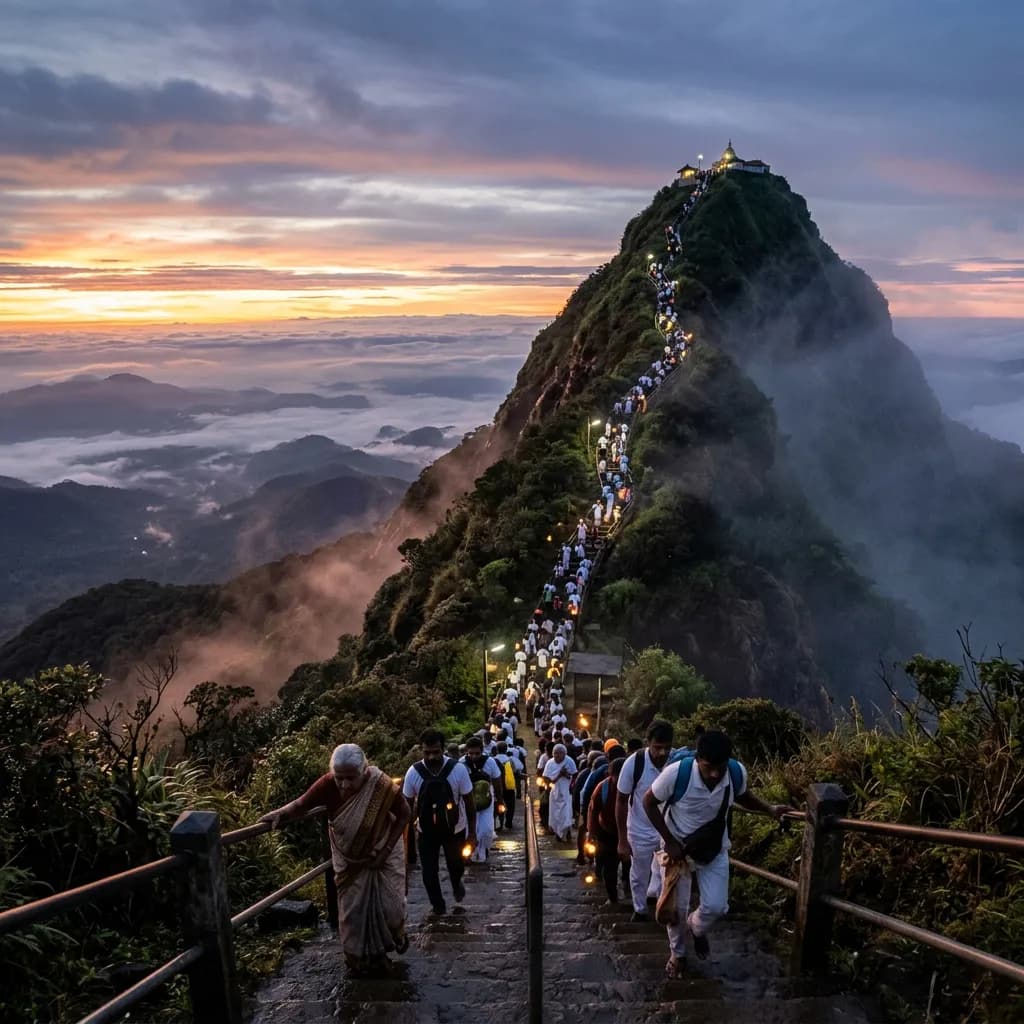
The British built more than railways in the hill country. They built a way of arriving — eleven hours on a narrow-gauge train climbing through Adam's Peak's shadow, past tin-roofed villages where children still wave at every passing carriage as if the train itself were a celebrity.
We stay in restored planter's bungalows of the 1890s — woven cane chairs, slow ceiling fans, a butler with a tray of cucumber sandwiches at half past four. The point is not luxury. The point is the precise, antique quality of the silence.
At dawn, the head plucker walks ahead of you; her basket fills by the second leaf and the bud. You learn that altitude makes the difference between Orange Pekoe and dust — and that "Ceylon tea" is, at root, a story about water and weather.
"The mist comes up the valley like a slow visitor, and then settles in for tea."
Galle, where four empires changed the same lock.
A walking week inside the seventeenth-century ramparts.
The Dutch rebuilt what the Portuguese built; the British kept the keys.
A 36-hectare granite fort on Sri Lanka's southern tip, occupied successively by Portugal (1505), the Netherlands (1640) and Britain (1796) — and now, mercifully, by the writers, gem-cutters and antiquarians of Galle itself.
We base ourselves at a 1690s warehouse on Pedlar Street, restored to its lime-washed bones and given over to a chef who once cooked at Noma's Copenhagen kitchen. Mornings are for the Maritime Archaeology Museum; afternoons, for the rampart walk; evenings, for arrack on a verandah and the cricket finals at the Galle International Stadium beyond the wall.
The Fort is the most complete European-built fortification in South Asia, and one of very few in the world inscribed by UNESCO as living heritage — meaning that families still occupy the same houses their great-great-great-grandparents did, four flags ago.
"The lighthouse keeper's grandson still polishes the lens; the lens still cost three months of a coolie's wage."
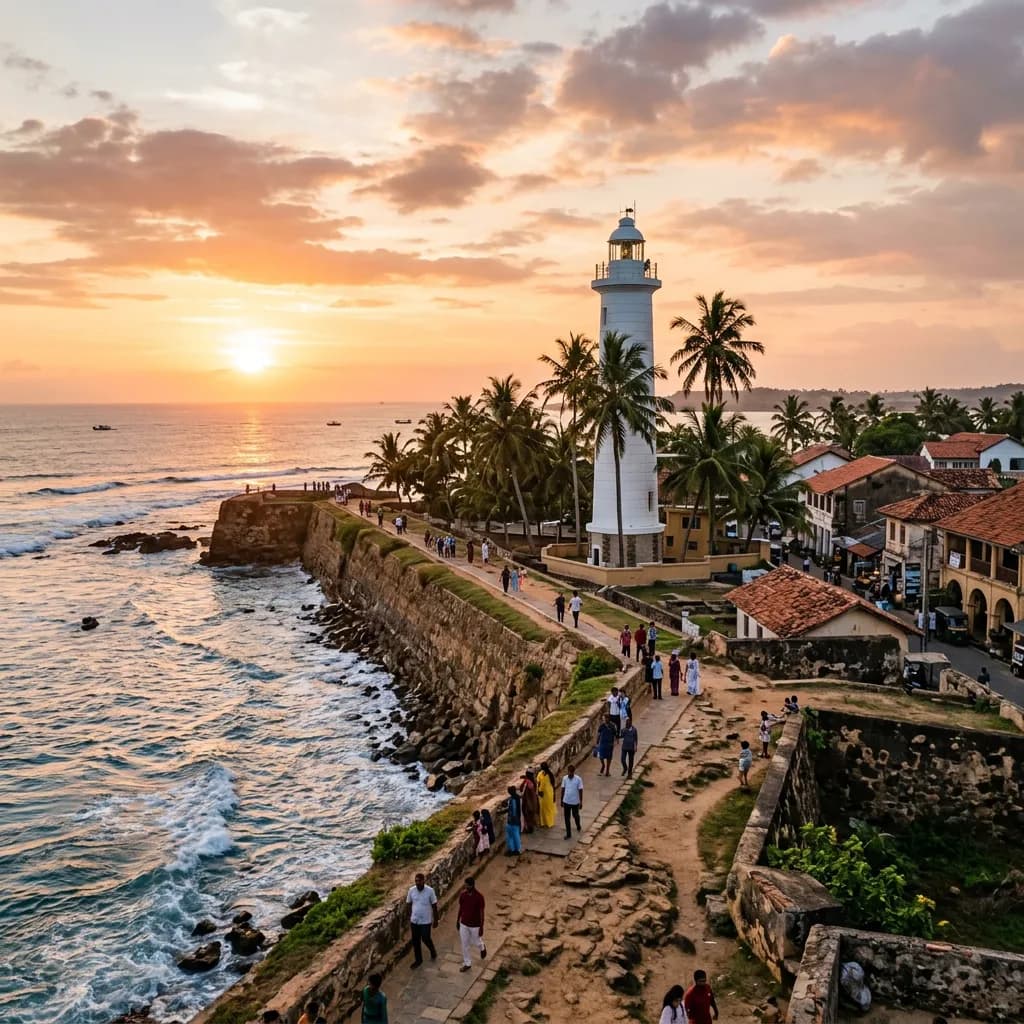 Plate VI·a · Flag Rock at dusk
The island, read in light.
A rolling commission with eleven photographers in residence — from Mirissa's blue hour to Anuradhapura's dust.
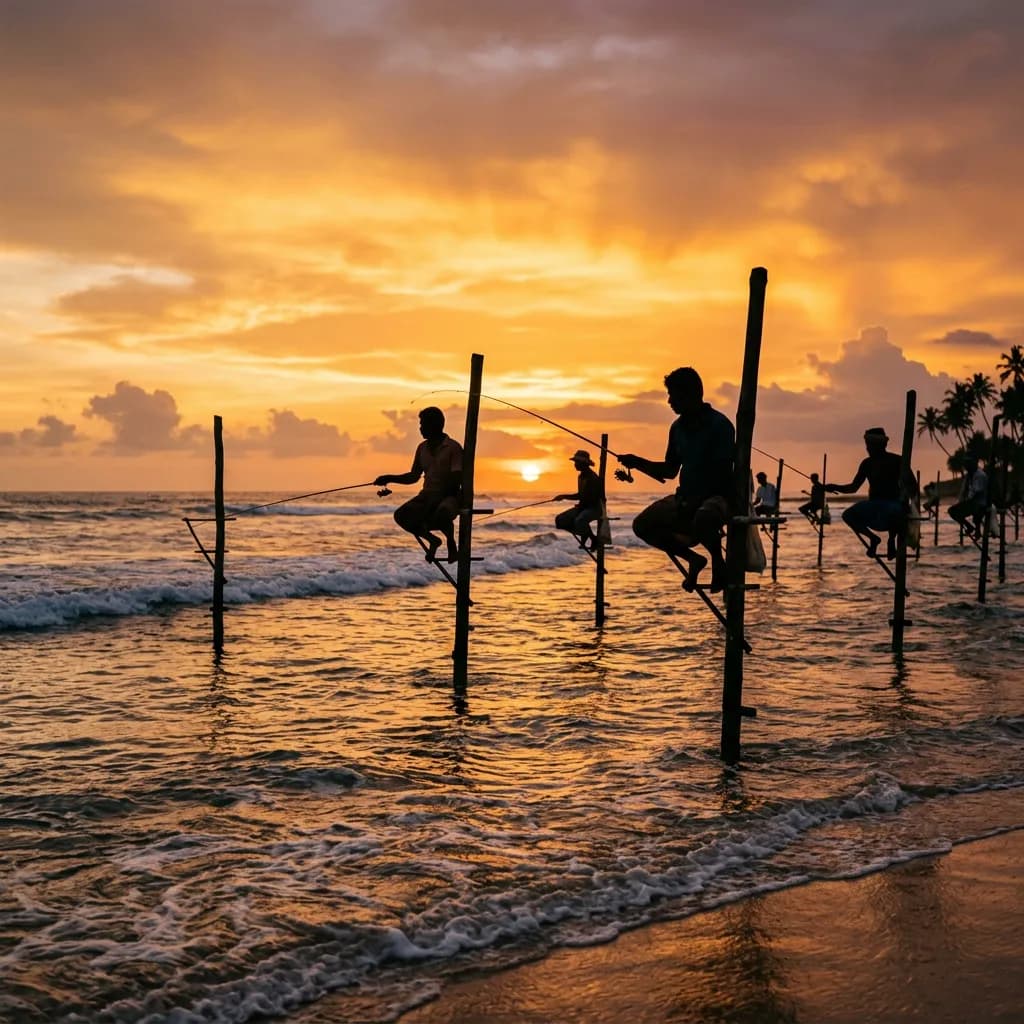
Cinnamon was a secret; rice & curry is the answer.
Five hundred years ago Sri Lanka's spices ran the world's tables. We still cook like it.
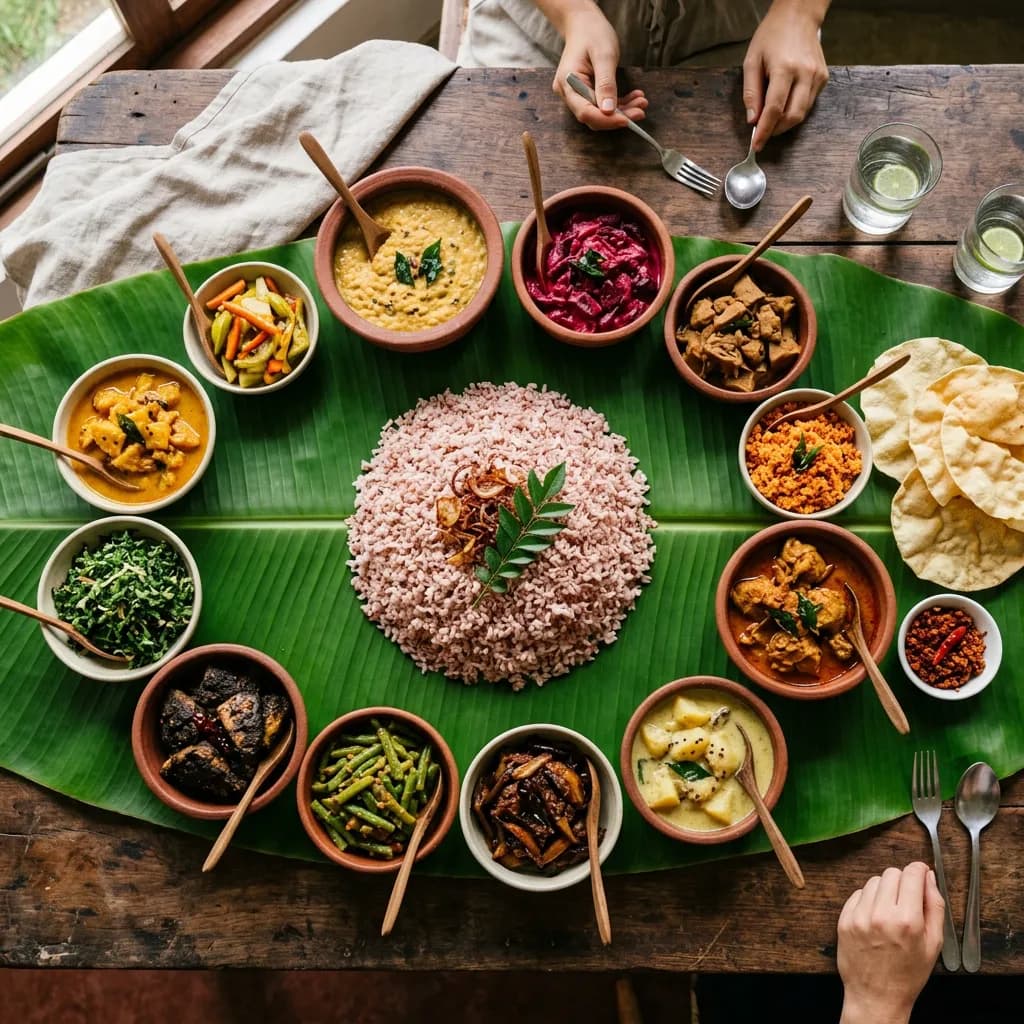 Plate VIII·a · Twelve curries, one rice
A meal that maps the island.
Eat a Sri Lankan rice & curry properly and you will have travelled the island clockwise: jackfruit from Kurunegala, prawn from Negombo, dhal from anywhere, coconut sambol from a grandmother in Galle.
When the island is itself.
Sri Lanka does not have a high season; it has two monsoons that take turns being elsewhere.
Six long readings of the island.
Each is a private journey — driver-guide, resident curator, a manuscript of footnotes, and lodgings we have personally slept in.
Package № 01 · Heritage AtlasThe Kingdoms Letter
A long, slow reading of the Cultural Triangle and its capitals — from Anuradhapura's reservoirs to Kandy's last lake. Three UNESCO sites, two private archaeologists, one tooth relic.
Package № 02 · Hill CountryA Planter's Year
Ten nights in restored 1890s planter's bungalows above the tea — Castlereagh, Norwood, Adisham. We ride the narrow-gauge from Kandy to Ella; you read; the kettle does the rest.
Package № 03 · Colonial SouthThe Colonial Coast
Galle Fort's seventeenth-century ramparts, a chef's table in a 1690 Dutch warehouse, blue-whale season off Mirissa, and a private dawn at the Kataragama pilgrim road.
Package № 04 · Spice & ScriptureSpice & Scripture
A week of cardamom, pepper and ola-leaf manuscripts — cooking residencies, the cave where the Pali Canon was first written down, and the timber carvings of Embekka.
Package № 05 · Photographer's AtlasThe Photographer's Atlas
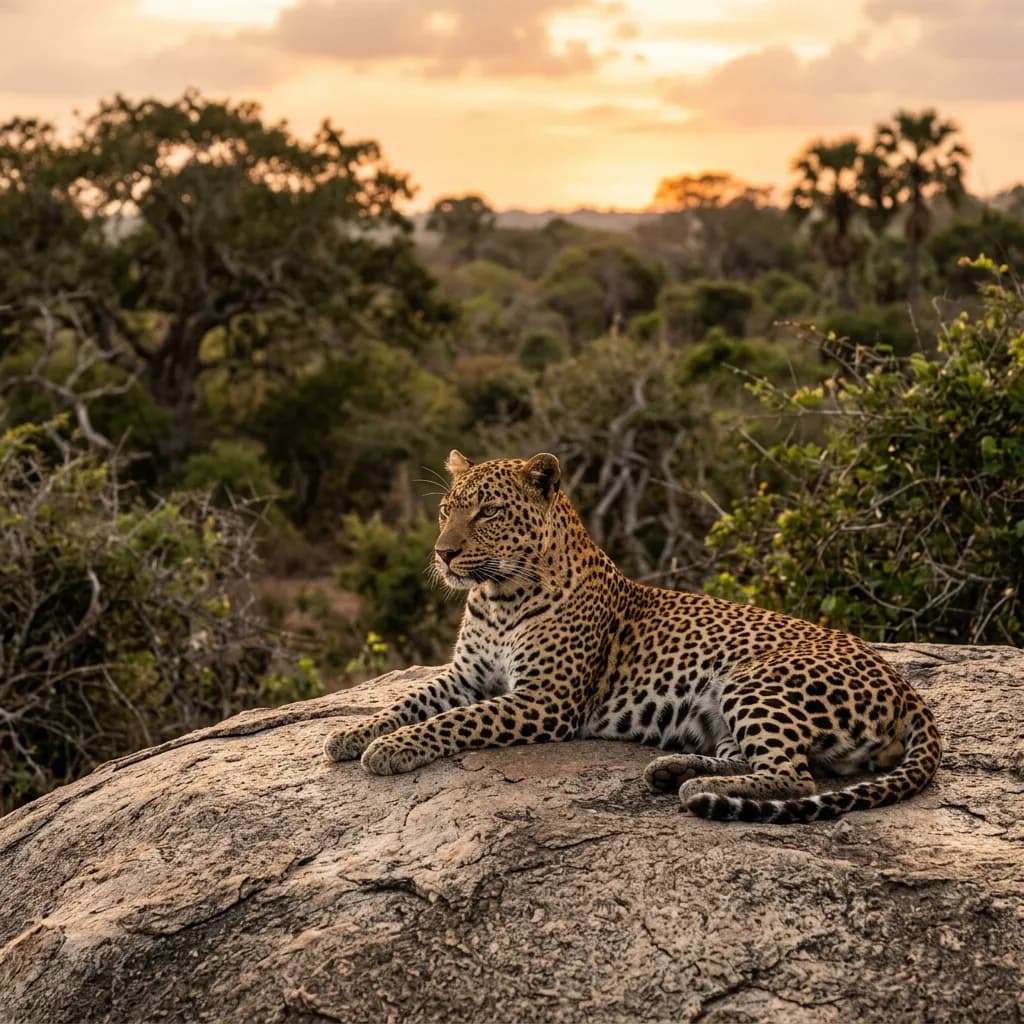
Two weeks of golden hours — leopards in Wilpattu, the ridgeline of Adam's Peak, Horton Plains at first light, Yapahuwa's carved staircase, and a final five nights inside Galle Fort.
Package № 06 · Slow HoneymoonA Slow Honeymoon
Eleven nights of nothing in particular — a Geoffrey Bawa hotel above Bentota, a planter's suite in Hatton, a private villa on a Tangalle headland, and a final two nights inside Galle's ramparts.
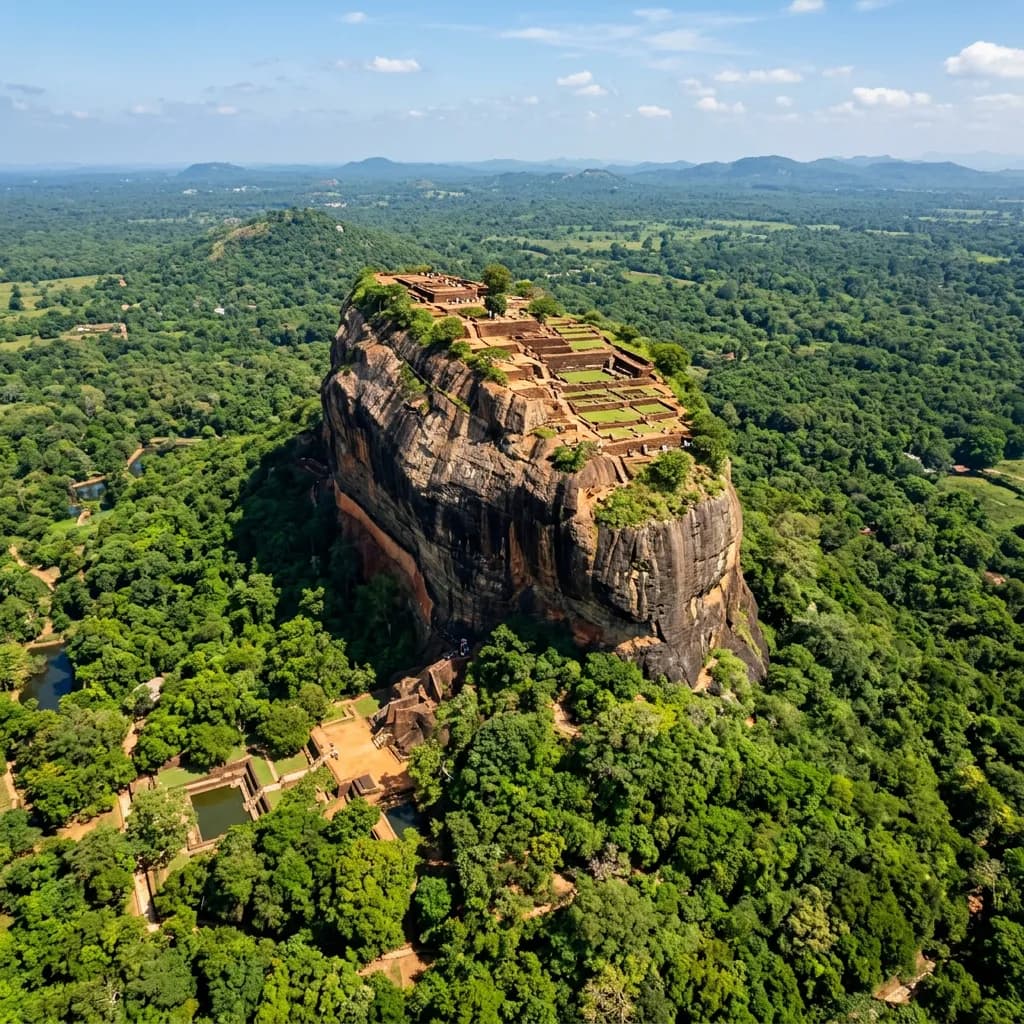 Package № 07 · Classic Sri Lanka
Classic Sri Lanka
The whole island in one well-paced fortnight — the Cultural Triangle, a safari, the hill-country train and a finish on the south coast. The ideal first trip.
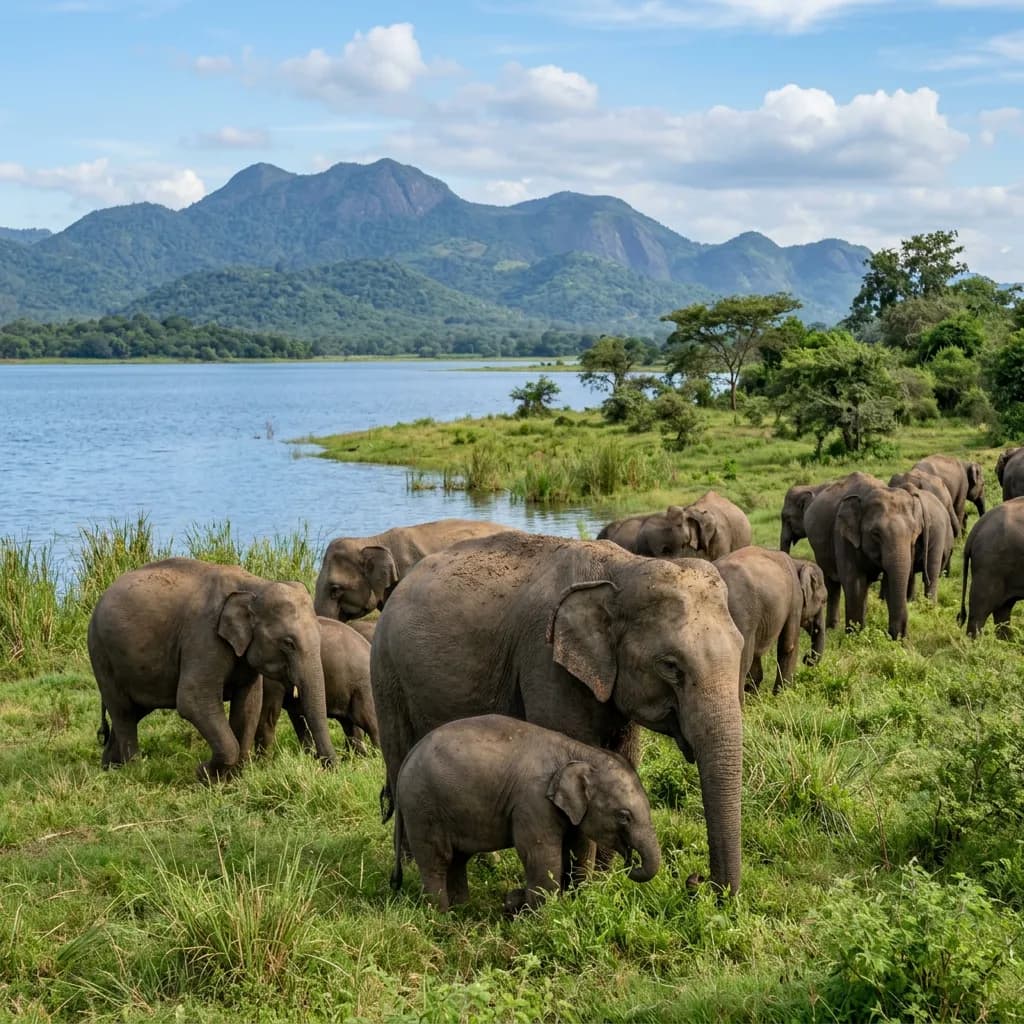 Package № 08 · Family Adventure
Family Adventure
Short drives, an easy safari, a fort to explore, a train through the tea and a soft landing on a calm south-coast beach — paced for real families.
Package № 09 · The British Ceylon CollectionThe British Ceylon Fortnight
Fourteen days for the heritage traveller — colonial Colombo and Galle Fort, the cultural triangle, the great hill-country railway and a planter’s bungalow above the tea. The signature Ceylon journey.
The island still believes some of its own stories.
A reading room of Sri Lankan myth — sometimes taken straight, sometimes with a smile.
Adam's footprint, five faiths
On the summit of a 2,243-metre cone in the hill country there is a single shallow depression in the rock. Buddhists call it the footprint of the Buddha; Hindus, of Shiva; Muslims and Christians, of Adam himself. The mountain has been a pilgrim site for thirteen centuries.
The king who turned a rock into a king
In the 5th century, prince Kasyapa murdered his father and built his palace on the summit of a 200-metre rock to keep his brother out. He carved a lion's mouth into the cliff as the entrance, painted his courtesans across the western face, and ruled for eighteen years before the rains.
The demons we still feed
The Yakku — ill-tempered spirits of place — are placated through the Sanni Yakuma, an all-night exorcism dance involving eighteen wooden masks, drumming and rice offerings. Performed in southern villages from the 5th century to last Saturday.
The tooth that refused to burn
In 543 BCE the Buddha's left canine tooth was rescued from his funeral pyre and, in the 4th century CE, smuggled to Sri Lanka inside the hair of an Orissan princess. It has been the kingdom's palladium ever since — the city that holds it holds the right to rule.
A lion, a princess, a kingdom
The Mahavamsa records that the first Sinhalese king was the grandson of a North Indian princess and a lion. His name, Vijaya, founded the line that would build Anuradhapura. "Sinhala" itself means "of the lion." Even the flag still has one.
The bridge Rama is said to have built
The chain of limestone shoals connecting Mannar to Rameswaram in southern India is called, in the Ramayana, Rama's Bridge — built by his army of monkeys to rescue Sita from the Sri Lankan demon-king Ravana. Geologists call it a tombolo.
What the guidebooks still forget.
Twenty-four sites we will only take a curious traveller to. Not for the rushed.
A brief 13th-century capital on a single granite rock, with one of the most beautiful surviving carved staircases in South Asia. Half a day from the main road; no shop, no guide hut, no queue.
A 9th-century forest hermitage hidden inside a strict nature reserve. Ascetic monks, double-platform meditation walks, and a stone-paved path through a sub-canopy of medicinal trees.
A village shrine of teak pillars carved in the 14th century — wrestlers, swans, dancers, a horse with a man's face — the most exuberant timber carving on the island.
A small cave temple north of Matale where, in the 1st century BCE, 500 monks finally committed the Buddha's oral teachings to ola-leaf manuscript. The shelves are still here.
A vermilion-and-gold Tamil Hindu kovil in the deep north, with a 25-day August festival that fills the streets with drums, hook-swingers and oil lamps the size of soup tureens.
A village of fifty houses inside the Knuckles range — terraced rice, cardamom forest, leech-rich monsoon, and a homestay where the grandmother grinds her own kithul treacle.
Films our writers made on the road.
Short films, 6–14 minutes — produced with Tours of Ceylon correspondents in residence.
FILM № 0111′44″FILM № 0208′12″FILM № 0314′02″FILM № 0406′28″What the writers sent home.
A selected reading from the visitors' book and the periodicals.
Tours of Ceylon reads Sri Lanka the way a great editor reads a manuscript — slowly, twice, and out loud.
Three weeks with their head curator and I came home with a different shelf of books — and an entirely altered understanding of monsoon.
The most literary tour operator I have ever encountered. They footnote their itineraries — actually footnote them — and the footnotes are good.
We arrived expecting a holiday. We left with a reading list, three friendships, and a recipe for jackfruit curry we will be making for the rest of our lives.
A rare thing — a luxury travel firm that does not mistake luxury for thread count. Their luxury is silence, scholarship, and the right driver.
Worth the long flight. Worth the longer return — six months back in London and we are still reading the dossier they put together for us.
Tell us how you read. We'll write the route.
A real curator answers within 18 working hours — not a chatbot, not a form-filler. Your reply will arrive as a private PDF dossier with photographs, costings and a draft daily score.
WhatsApp a curatorLong reading on a small island.
Monthly dispatches — original research from our resident historians, planters, photographers.
How a 5th-century king built an elevator out of a rock.
An engineer's reading of the hydraulic gardens at Sigiriya, the world's oldest landscape design still legible from the air. By Dr A. Rajapaksa, 14 min read.